Learn 5G NR Log Analysis: A Practical Step-by-Step Path
Follow one procedure end to end in real logs: SA registration, PDU session, mobility, F1AP/NGAP/E1AP and O-RAN basics.
If you are moving from LTE to 5G, reading specifications alone only takes you so far. Log analysis is where concepts become clear, because you can see each message, parameter and failure in the order it happened. This is a practical path to learn 5G NR log analysis, from first procedure to O-RAN basics.
Why Log Analysis Matters
Most real issues, such as failed registration, dropped calls, poor throughput or handover failures, show up first in logs. Engineers who can read them quickly find the root cause faster, and that skill is useful in testing, optimization, integration and support roles.
Step 1: Start with 5G SA Registration and PDU Session Setup
Pick one procedure and follow it from start to finish. A good order is:
Cell search and system information. The UE finds the SSB (PSS, SSS, PBCH/MIB), then reads SIB1.
Random access. The UE sends a preamble and completes RACH.
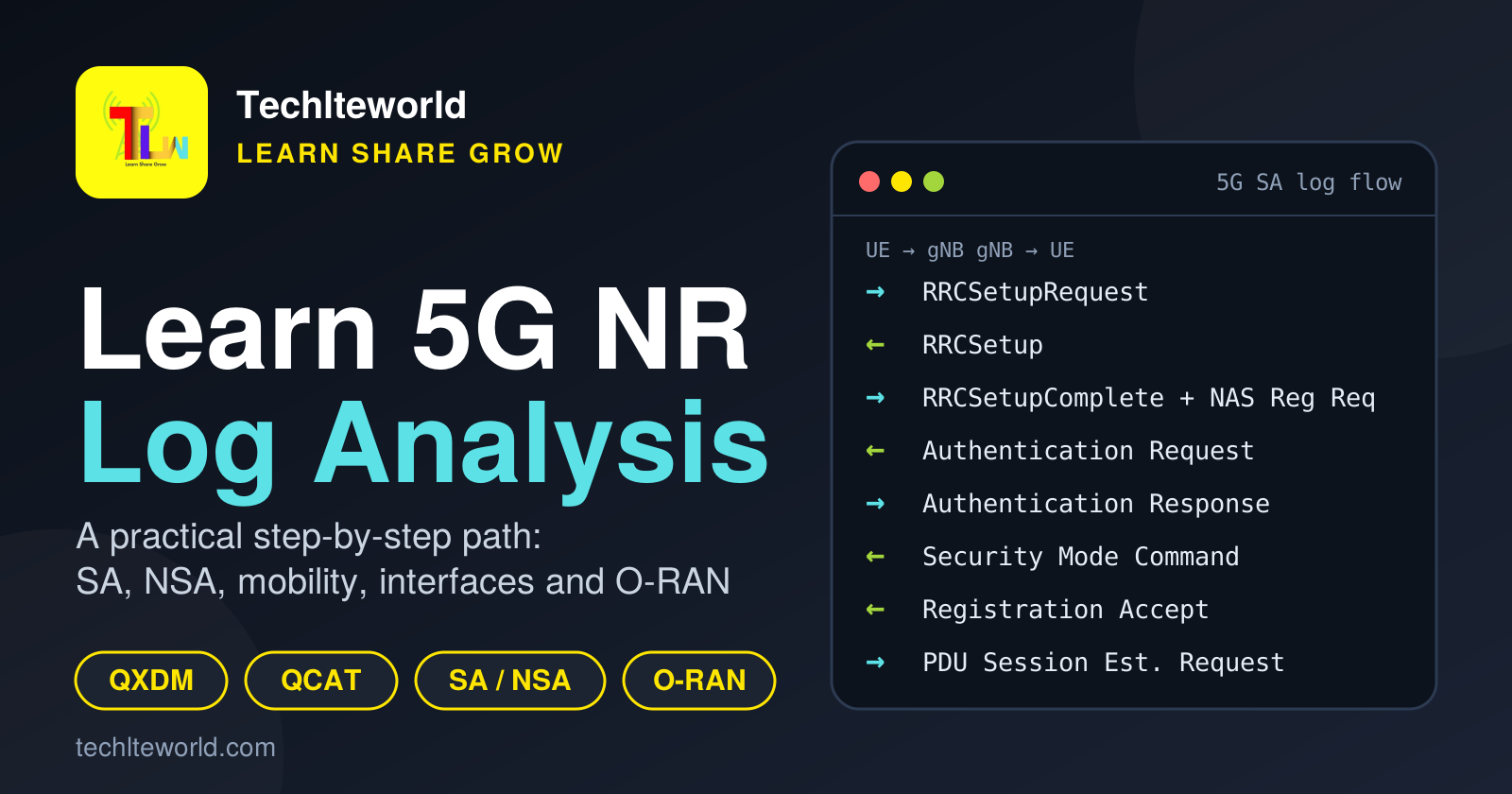
RRC setup. RRCSetupRequest, RRCSetup and RRCSetupComplete, which carries the NAS Registration Request.
Authentication and security. Authentication request/response, then the NAS and AS Security Mode Commands.
Registration accept and complete.
PDU session establishment. Request and accept, followed by an RRCReconfiguration that sets up the data radio bearers.
If you want a visual walkthrough, see the 5G SA registration and attach call flow.
Step 2: Compare NSA and SA
In NSA, the UE attaches to the 4G core through an LTE, and NR is added as a secondary leg. In SA, the UE connects to the 5G core. Looking at both in logs shows exactly where signalling, measurements and core interaction differ.
Step 3: Learn Mobility and Measurements
Study measurement configuration and reports (events like A3, A5 and B1), then the handover command (RRCReconfiguration with reconfigurationWithSync). Most important, learn what failures look like: radio link failure, RRC re-establishment, and handover failure cases.
Step 4: Understand the Interfaces
Many issues are visible only on network interfaces, so know what each one carries:
NGAP: gNB to AMF (control plane towards the core)
F1AP: between CU and DU
E1AP: between CU-CP and CU-UP
Xn: between gNBs
These are usually inspected in packet captures with a tool like Wireshark, so practise reading them there too.
Step 5: Add O-RAN Basics
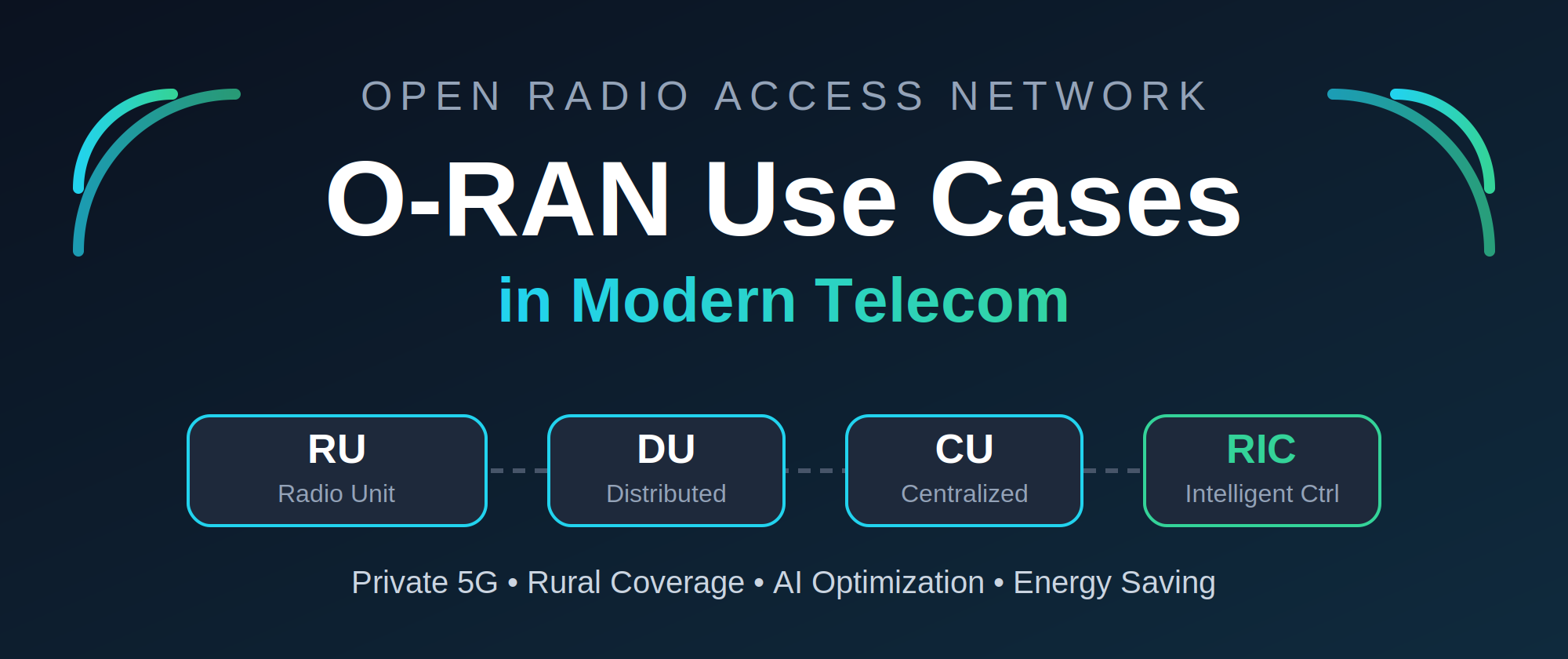
Once the 5G procedures make sense, move to O-RAN: the RU/DU/CU split, the 7.2x open fronthaul, the C/U/S/M planes, the M-Plane (NETCONF based), and the roles of the RIC and SMO. Timing matters here too, so learn PTP and SyncE.
Tools You Will Use
QXDM captures diagnostic logs from the UE side (Qualcomm chipsets), and QCAT helps you analyse them offline. For network interface traces, Wireshark is the common free option. Alongside logs, keep an eye on RSRP, RSRQ and SINR, since they explain many problems before you open a single message.
Practice Tips
Take one procedure per week and map every message to the step it belongs to.
Keep a personal “failure library”: a note of each failure pattern you see and its cause.
Test your knowledge regularly with the 5G NR quiz.
Use the 5G NR throughput calculator to connect numbers in logs with real capacity.
FAQ
Do I need a Qualcomm device to practise?
QXDM works with Qualcomm-based devices. If you do not have one, start with sample logs and packet captures, and focus on understanding the message flow first.
Should I learn LTE logs first?
It helps. Many 5G procedures build on LTE concepts, especially in NSA.
Want to Learn This Live?
Same path with live QXDM/QCAT log analysis and O-RAN topics. Details and the latest dates are on the 5G in-depth and O-RAN course page. For free learning material, visit Techlteworld and the 5G-NR knowledge bites.
About the author
- TechLTE World simplifies complex telecom technologies through easy-to-understand tutorials, real-world examples, telecom calculators, and professional courses. Learn LTE, 5G NR, Open RAN, protocol testing, carrier aggregation, RACH, RF concepts, and the latest wireless networking trends- all in one place.
Comments
Join the discussionNo comments yet. Be the first to comment.